
If you run a law firm, cybersecurity probably isn't something you think about - until something goes wrong.
And when it does, it's rarely a small inconvenience. It's usually disruptive, stressful, and in some cases, damaging to your reputation.
What we're seeing across law firms today, especially growing firms, isn't a lack of concern. It's a false sense of security. Systems seem to be working, nothing obvious is broken, and there's an assumption that "we're probably fine."
That's where most firms get caught off guard.
The biggest risk right now isn't some dramatic Hollywood-style hack. It's everyday vulnerabilities that quietly go unnoticed.
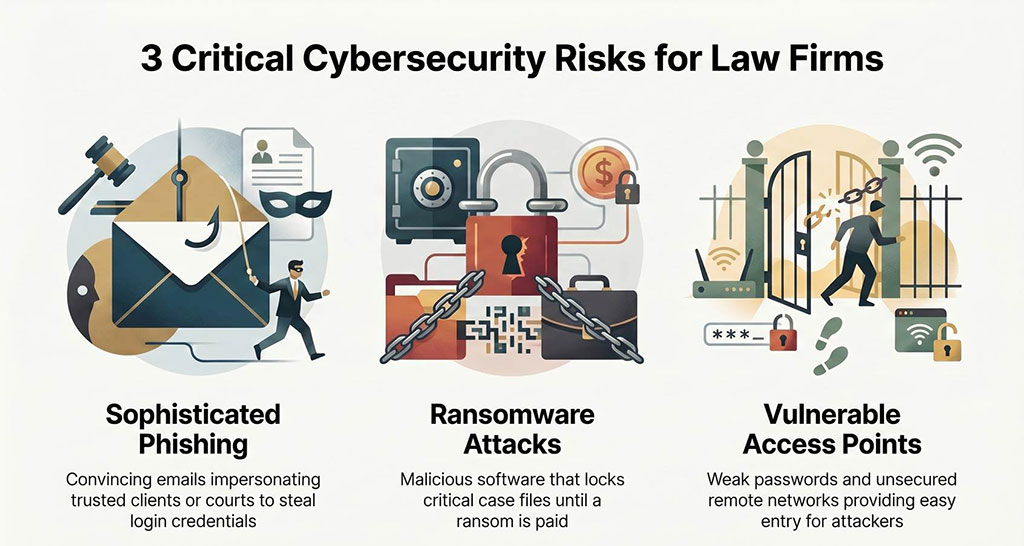
For example, phishing emails have become incredibly convincing. They often look like they're coming from clients, courts, or vendors your team already trusts. One click, one login, and suddenly someone else has access to your systems.
Then there's ransomware. Firms completely locked out of their files - case documents, emails, everything - until a payment is made. At that point, it's not an IT issue anymore. It's a business crisis.
Another common problem is weak access control. Simple passwords, shared logins, or lack of multi-factor authentication make it far easier than most firms realize for someone to get in.
And with more attorneys working remotely, unsecured devices and networks create even more entry points.
The pattern is always the same. Everything seems fine, until it isn't.
The reality is that law firms are a high-value target because of the data they hold. Confidential client information isn't just sensitive, it's valuable.
That's why the firms that stay ahead of this don't wait for a problem. They take the time to understand where they're vulnerable before something forces the issue.
If you're not completely confident in your current setup, that's usually a sign it's worth taking a closer look.